


Stepping Into Her Own Power
In this part of the countryside, paid work for women is scarce. Every weekday 21 women walk into our workshop to roll incense, hand-make dhoop and sambrani, blend and pack — and go home at the end of the month with an income that is theirs to decide about.
Nobody arrives here with a résumé. Word travels through families, not job boards, and most of the women who join us have had little or no formal schooling — which has never been the thing that decides whether someone can do this work well.

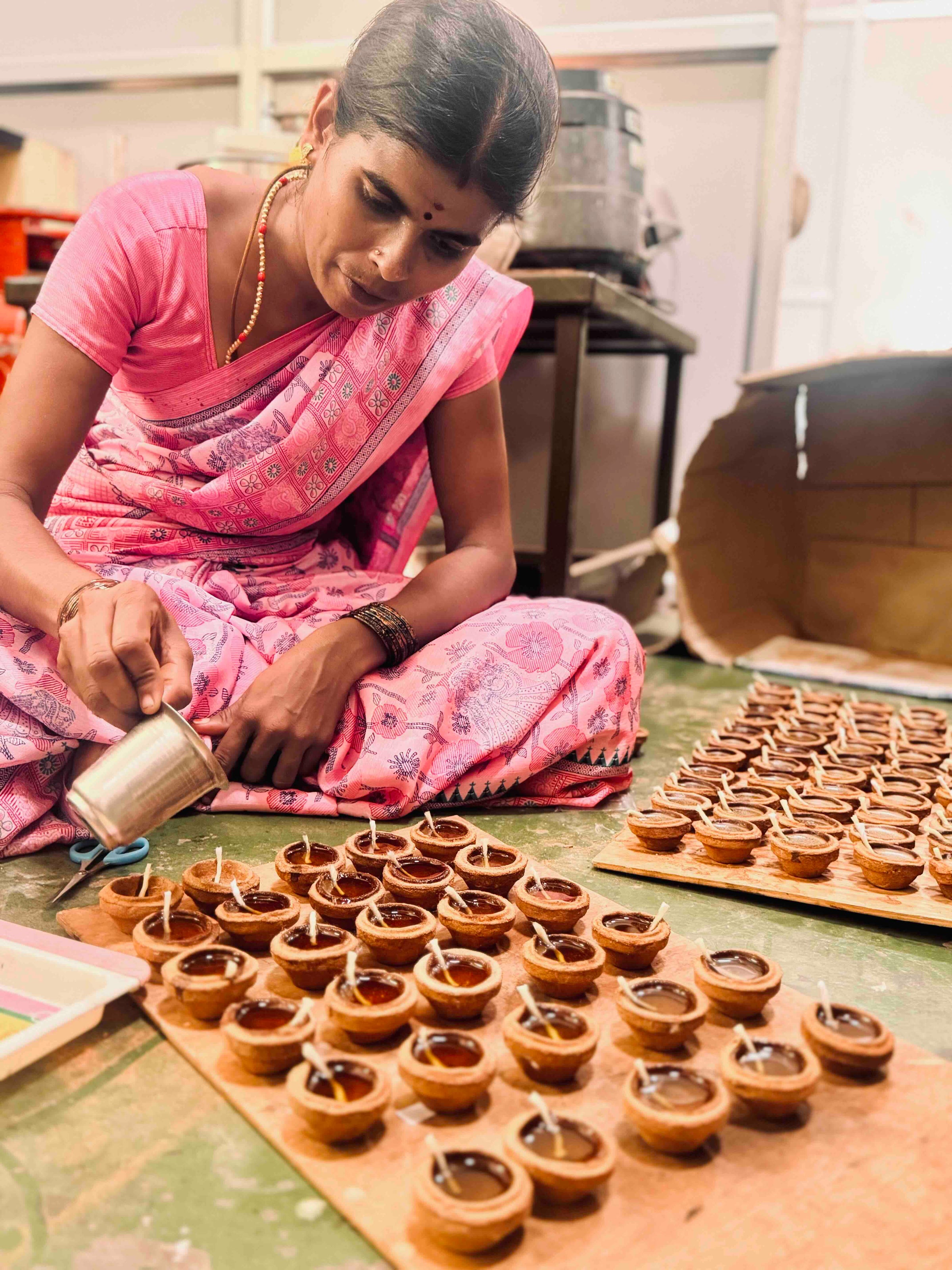
Eight Hours of Skilled Hand Work
Rolling incense sticks. Rolled one at a time, by hand, at a pace the material sets.
Hand-making dhoop & sambrani. Every cup is shaped and pressed by hand, one at a time.
Blending. The chemistry of resins, woods and oils, learned on the floor and refined over years.
Packing & boxing. Including the small printed blessing that goes inside each box.


What a Wage Actually Changes
When we asked the women here what the work has given them, almost nothing they said was about money on its own.
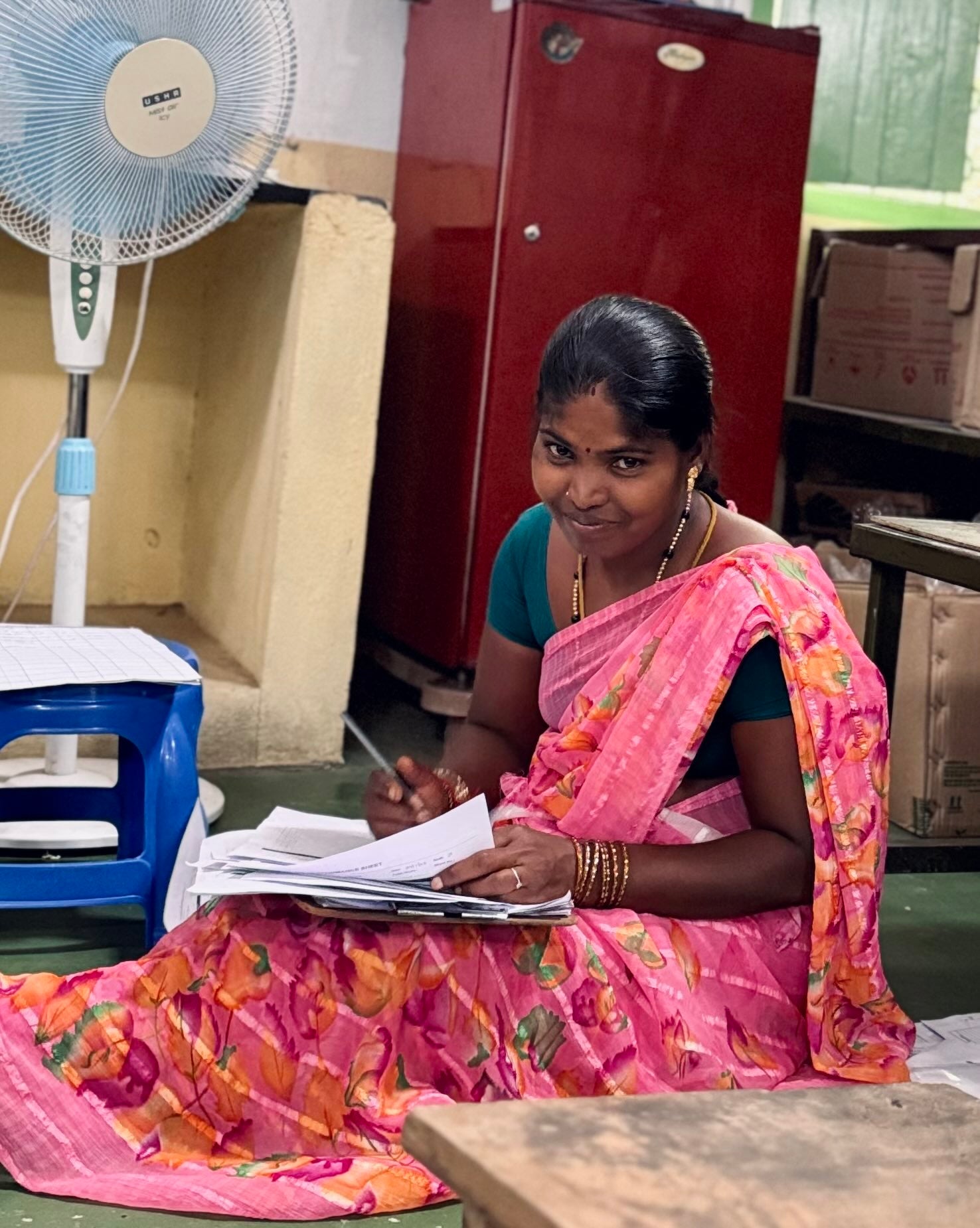
Money of Her Own
For many of them, this is the first income that is hers — earned independently of her husband, paid on time, every month. It buys a saree, or a small piece of jewellery, or it is set aside month by month for a child’s education.
“I can buy a saree without asking anyone.”
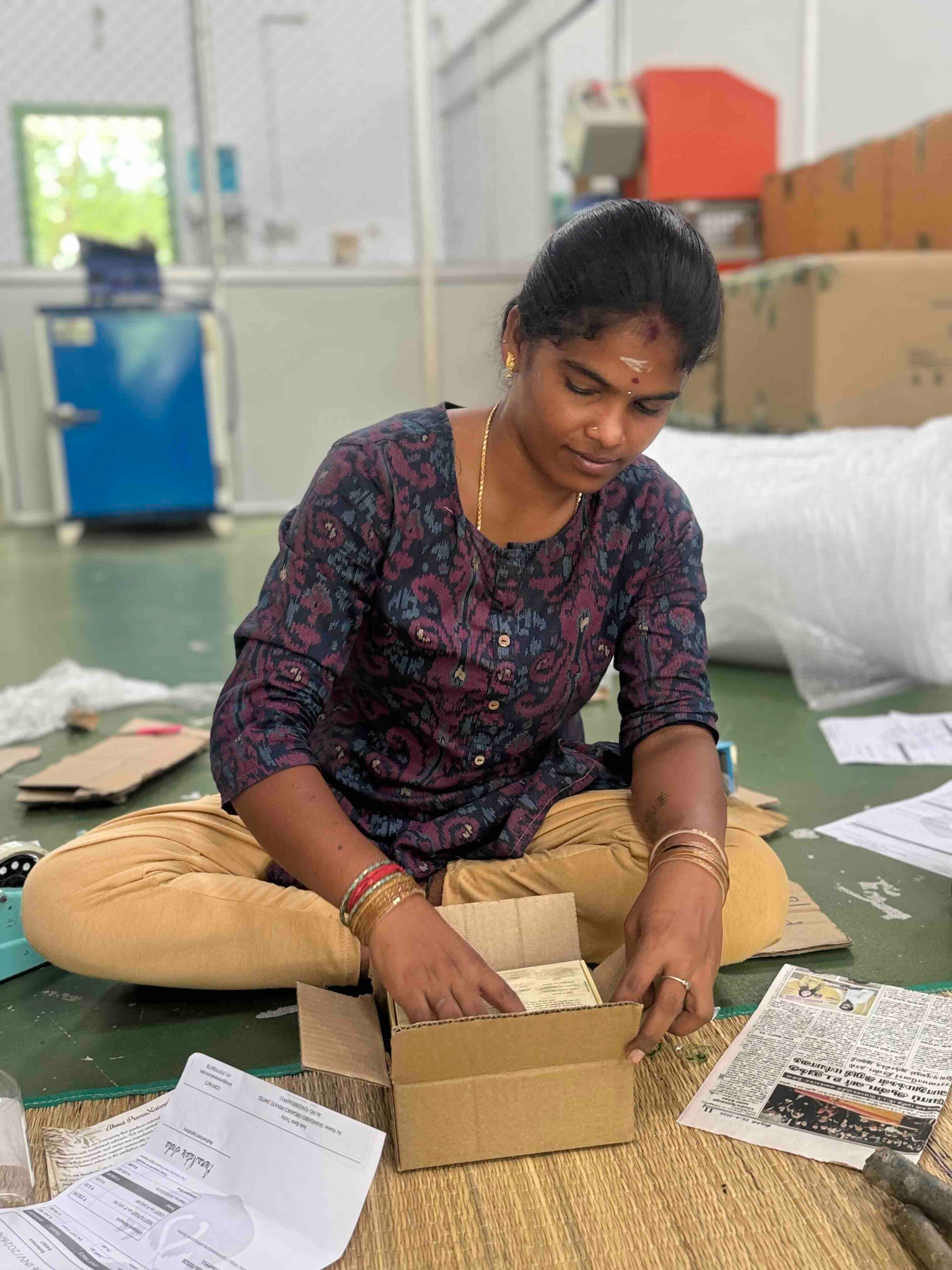
Care That Goes in the Box
The materials are ones they consider sacred, and they are handled with the attention that implies. Care goes into each piece deliberately, rather than each piece simply being produced. It is work worth doing — and so, they will tell you, is the person doing it.
Fair Trade, Checked by Someone Else

Our manufacturing company, SkandaBio Organics Pvt. Ltd., is a Guaranteed Member of the World Fair Trade Organisation — its highest monitoring tier. Which means none of the above is only our word for it.
See It for Yourself
“Whenever we receive an order, we have a small celebration here in our packing department.”
— Lalitha, packing department

When Women Choose...
